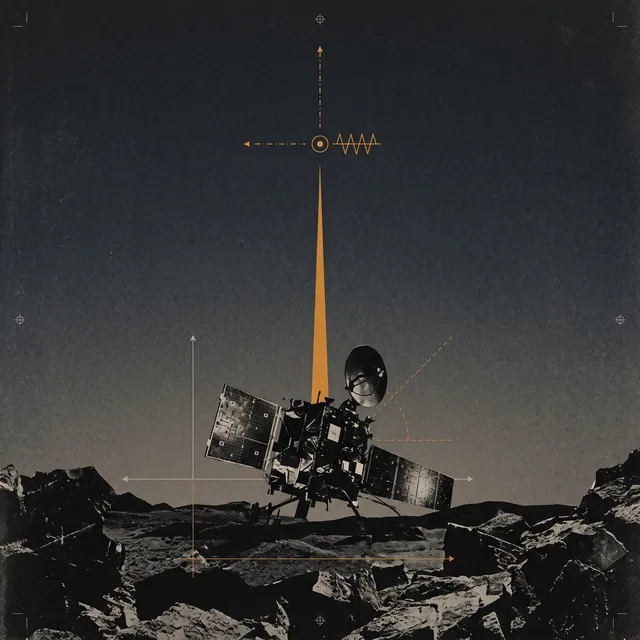
Long-term engineering projects might demand steady discipline to navigate extended timelines and unpredictable environments. Wikipedia's current events log for August 6, 2014 recorded that Europe's Rosetta space probe reached the distant 67P/Churyumov–Gerasimenko to orbit it and eventually land. The European Space Agency reported that the mission concept was first discussed in the late 1970s and approved in 1993. Maintaining strategic direction across multiple decades can present profound operational challenges for any team. Such prolonged efforts may require organizations to balance initial architectural choices with long-term adaptability. When work spans decades, maintaining team cohesion and technical memory might become as critical as the hardware itself.
How Decades of Planning Can Yield Deep Space Milestones
Complex ventures can often require quiet operational phases long before visible milestones occur. The European Space Agency reported that Rosetta woke up from deep space hibernation at 18:18 GMT on 20 January 2014, nine million kilometres from comet 67P/Churyumov–Gerasimenko. In general, early observations of any new target might show how systematic preparation can help operators handle changing physical environments. Extended planning windows may allow engineers to evaluate environmental feedback carefully before attempting complex procedures. Managing automated processes across vast distances can highlight the value of robust contingency planning in complex system design.
What Patient Execution May Teach Modern System Builders
When institutions undertake ambitious multi-decade endeavors, structural stability and deliberate execution can prove decisive. Systems built for extended journeys might need to operate under conditions that cannot be fully simulated in advance. Sustained progress over long horizons may rely less on immediate feedback loops and more on resilient organizational design. In general, technical endeavors that unfold over generation-scale timeframes could offer lessons in risk management and patient capital allocation. Leaders who build for the long term might benefit from treating time as a core design dimension rather than an obstacle. Enduring progress could depend on maintaining persistent focus through extended periods of quiet operational work.
Sources
- Portal:Current events/2014 August 6 (revision 620981638) - Wikipedia, 2014-08-12
- Rosetta arrives at comet destination / Rosetta / Space Science / Our Activities / ESA - European Space Agency, 2014-08-06