Complex operational missions may require systems to function entirely beyond real-time human control. When feedback delays span extended periods, operators may no longer be able to rely on immediate intervention or rapid course corrections. In such environments, operational success might depend far more on decisions made years prior during initial system design than on active management. Designing for long delays could force teams to anticipate potential failures long before those failures can manifest. Building robust systems under these conditions might demand a re-examination of how authority is delegated to automated processes.
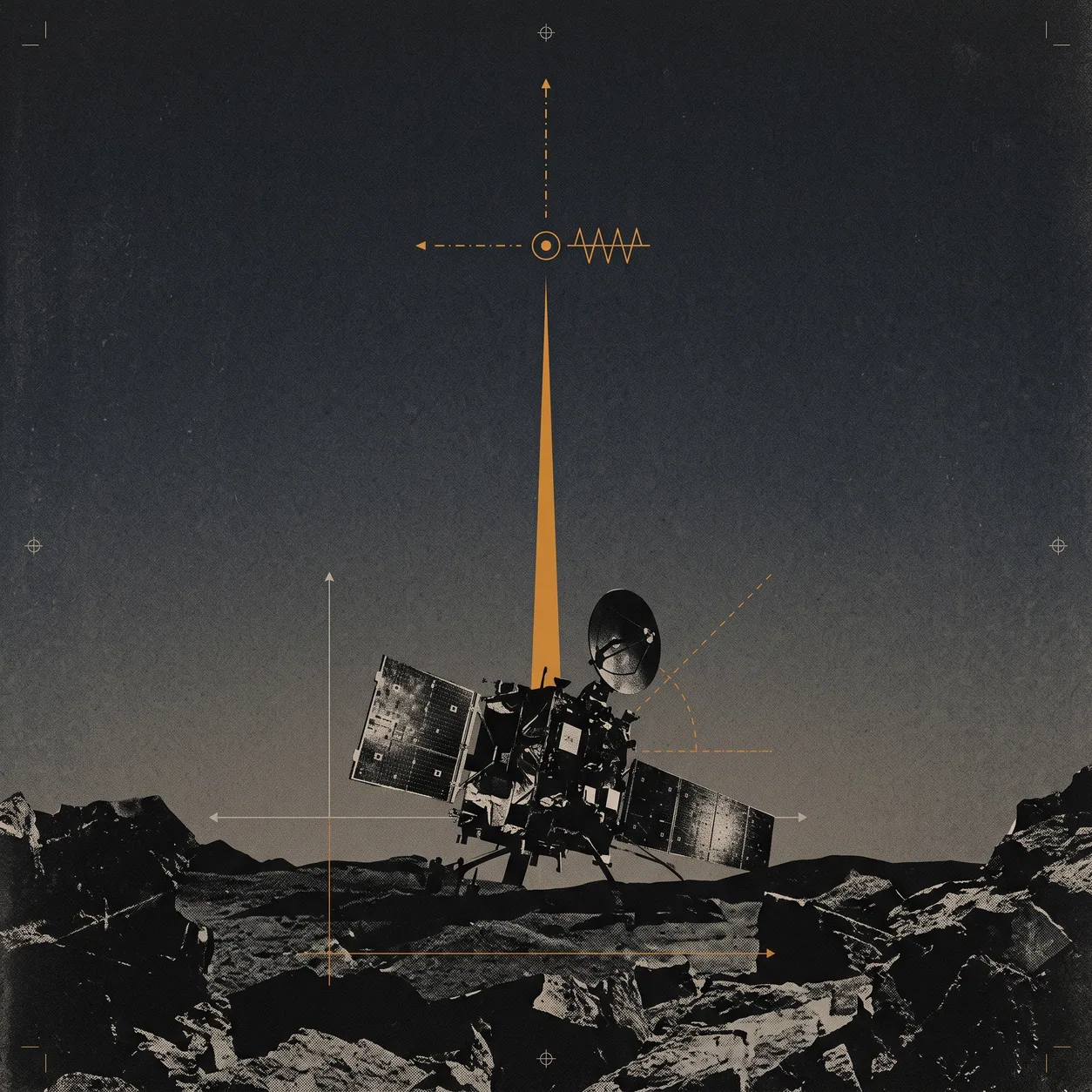
Wikipedia's current-events log for November 12, 2014 recorded that the European Space Agency's Rosetta landed the Philae probe on the comet 67P/Churyumov-Gerasimenko.
How long feedback loops may alter project design
When physical constraints prevent real-time feedback, project management could shift dramatically from reactive problem-solving to proactive architecture. Teams operating in high-delay environments might need to invest significantly more effort into upfront risk modeling. In general, long feedback loops can amplify the impact of early design choices while diminishing the utility of tactical adjustments.
Furthermore, managing complex operations across multi-year schedules might require enduring trust in autonomous execution. When direct communication is delayed, active steering could prove practically impossible. Engineering culture might learn to prioritize autonomous resilience over continuous manual supervision.
Why autonomy might redefine operational success
A system built to navigate unpredictable environments autonomously might demonstrate that true operational control resides in preparation rather than real-time intervention. When human oversight is separated from physical action by massive distances, performance may depend almost entirely on how thoroughly scenarios were evaluated beforehand. Builders facing long-horizon challenges might find that empowering autonomous routines can yield far greater stability than attempting to maintain live oversight.
Ultimately, long-distance initiatives could serve as a useful reframe for organizational decision-making. Perhaps the ultimate test of system design is not how well a team can control an operation in real time, but how effectively the system can perform when real-time control is impossible.
Sources
- Portal:Current events/2014 November 12 (revision 633725311) - Wikipedia, 2014-11-13