Complex engineering projects might benefit from aggressive live testing before core operations are fully committed. Subjecting early prototypes to extreme environmental stress can offer empirical validation that software models alone might never fully capture.
What occurred during the December 2014 Orion spaceflight test?
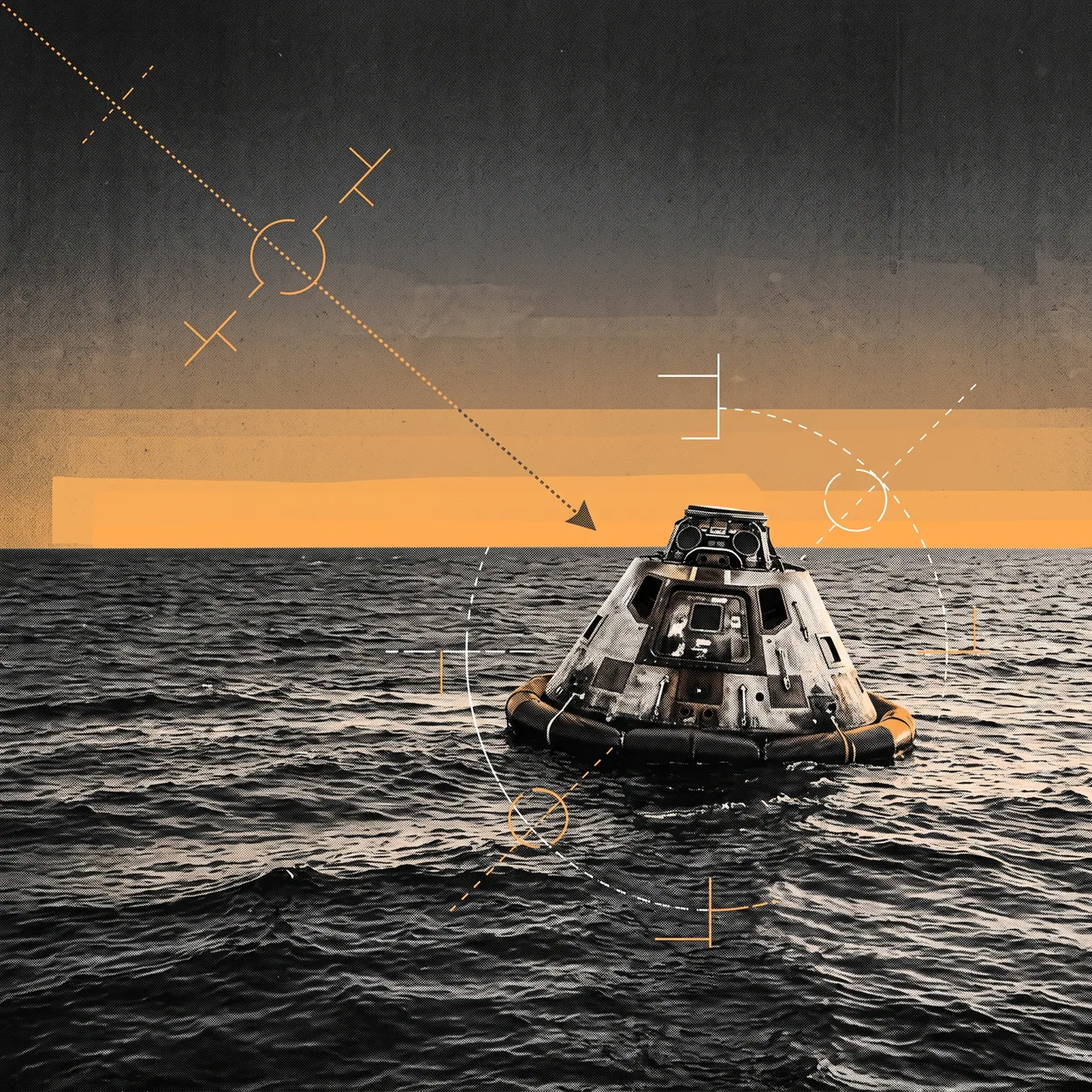
NASA reported that Orion lifted off at 7:05 a.m. EST from Space Launch Complex 37 at Cape Canaveral Air Force Station in Florida. BBC News reported that a Delta IV-Heavy rocket carried an unmanned version of the space agency's new crew capsule into the sky at 07:05 local time (12:05 GMT). NASA reported that during the uncrewed test, Orion traveled twice through the Van Allen belt where it experienced high periods of radiation. NASA reported that the Orion crew module splashed down approximately 4.5 hours after its launch, in the Pacific Ocean, 600 miles southwest of San Diego. Wikipedia's current-events log for December 5, 2014 recorded that the first flight test of NASA's Orion spacecraft launched successfully at 7:05 EST (12:05 UTC).
Why could uncrewed operational trials offer crucial design insights?
Exposing hardware to actual environmental hazards without crew members aboard might allow engineering teams to observe structural behavior under genuine pressure. Passing through severe environmental conditions could potentially highlight physical anomalies that digital simulations might obscure or overlook entirely. By gathering real telemetry in uncrewed conditions, designers might refine crucial sub-systems with lower overall operational risk.
For organizations building long-term technological platforms, early operational testing can sometimes appear expensive or logistically complex. However, avoiding live stress tests might merely defer critical discovery until later phases where failure carries far heavier consequences. In general, conducting early, high-intensity trials can enable teams to validate baseline resilience and adjust specifications before committing to full-scale operations.
Long-term system reliability might ultimately depend less on theoretical perfection and more on a structured willingness to expose prototypes to harsh reality.
Sources
- Portal:Current events/2014 December 5 (revision 640083796) - Wikipedia, 2014-12-29
- NASA’s New Orion Spacecraft Completes First Spaceflight Test | NASA - NASA, 2014-12-05
- BBC News - Nasa’s Orion deep space capsule launches - BBC News, 2014-12-05