Complex systems often project an illusion of permanence. People build networks of trade, government and daily life, often assuming that what they create will last. Yet history repeatedly demonstrates that entire networks of human organization can simply disappear.
Wikipedia's current-events log for December 17, 2008 recorded that ruins of an entire ancient city belonging to the Wari culture are discovered in northern Peru.
A find like this may invite a second look at how progress is understood. A city is more than its buildings; it may also stand for a way of sharing resources, ranks and knowledge. When a city is abandoned, it can be a reminder that the arrangements holding a place together may be as fragile as its walls.
Infrastructure Without the Operator
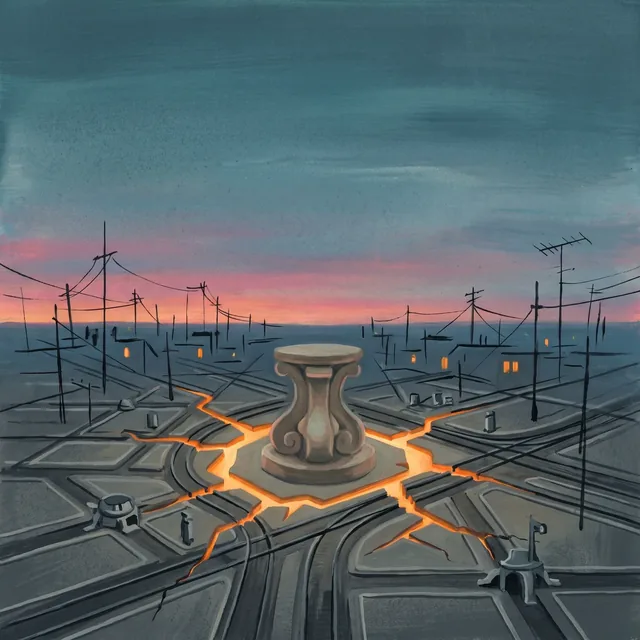
The physical remnants of a society often survive long after the operating system of that society (its culture, laws, and daily routines) has crashed. Builders and planners focus heavily on the tangible outputs of their work. They construct roads, establish boundaries, and erect monuments to current needs. However, the true resilience of any organized group lies in its adaptability, not just its masonry. When the environment shifts or internal cohesion fails, the physical shell is left behind as a silent testament to a defunct enterprise.
Designing for Impermanence
Recognizing that even the most robust human settlements can be swallowed by the earth shifts the perspective on modern building. Whether constructing a digital platform or a physical institution, the focus must extend beyond mere durability. Systems require constant maintenance, cultural buy-in, and adaptation to survive. Without these active inputs, any complex structure eventually becomes an artifact.
The ultimate measure of a system is not how long its ruins last, but how effectively it serves its inhabitants before the inevitable shift occurs.
Sources
- Portal:Current events/2008 December 17 (revision 258920408) - Wikipedia, 2008-12-19