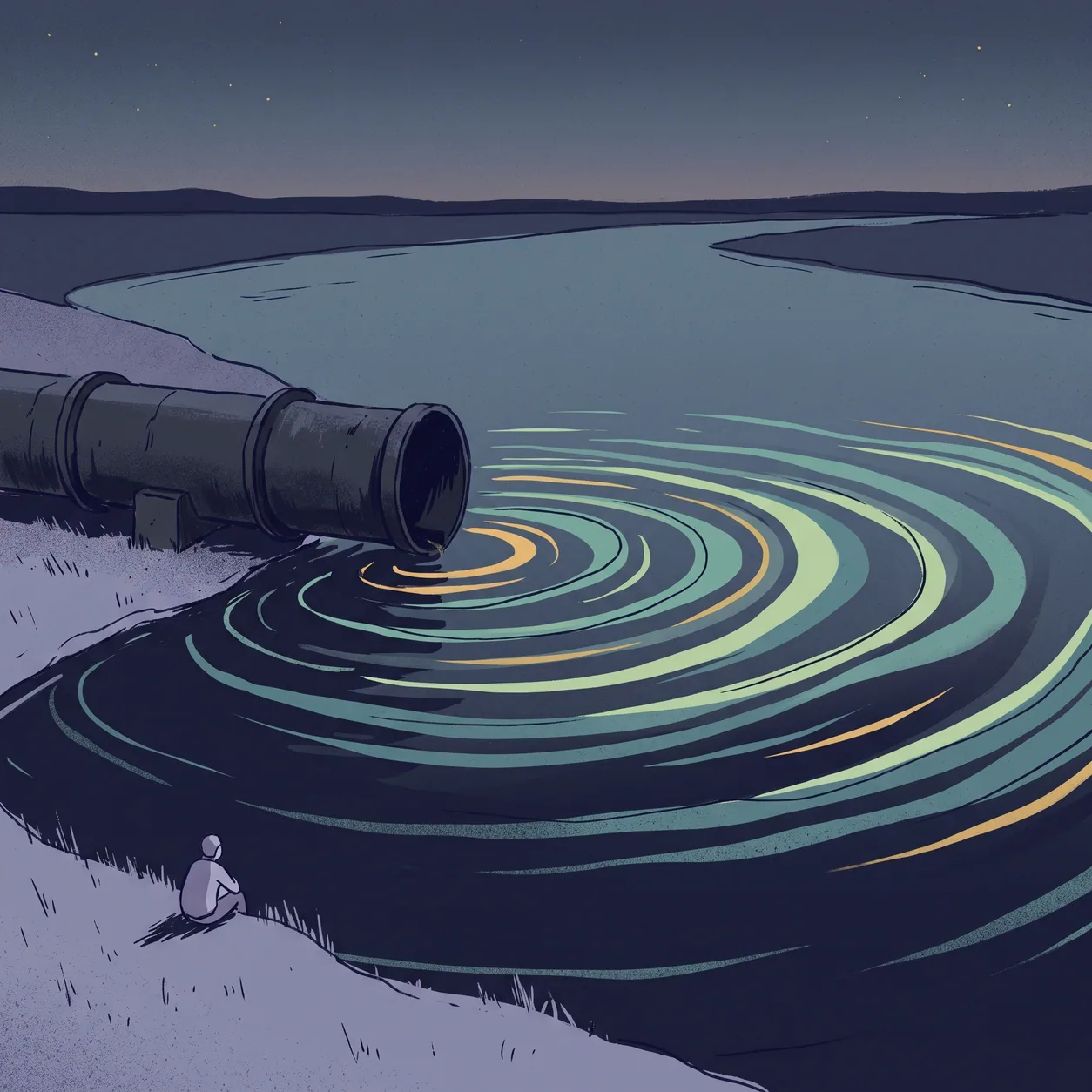
Complex infrastructure projects can often produce unintended secondary outputs that challenge initial operational assumptions. When large technical or industrial processes handle high volumes of inputs, overlooked byproducts might accumulate quietly across connected downstream environments without immediate detection.
Unintended Outputs May Expose System Bottlenecks
Wikipedia's current-events log recorded that researchers reported, in a journal, the discovery of antidepressant concentrations in 10 kinds of fish in the Niagara River. Wikipedia's current-events log added that speculated causes of those concentrations include inadequate treatment of water re-introduced into the river.
This finding might illustrate how complex delivery networks can fail to isolate trace byproducts before returning processed flows to shared public domains. In large processing operations, designers may focus heavily on primary performance goals while potentially underestimating secondary residues. A complex infrastructure network could appear completely functional under standard operational metrics, yet subtle systemic leakages might gradually alter peripheral environments over extended operational periods.
Why Feedback Loops Could Improve Complex Design
Engineering leaders might draw broader lessons from such ecological indicators when evaluating operational design and systemic accountability. Failure to account for unintended outputs can create long-term external vulnerabilities that might eventually demand costly structural re-engineering. Implementing continuous downstream feedback loops could help organizations identify unexpected systemic drifts far earlier in a product or facility life cycle.
Analyzing secondary effects can also reshape how technical teams assess long-term risk management across distributed deployments. When internal quality control measures focus exclusively on standard operational throughput, subtle side effects might remain undetected for extended durations. Systems thinking suggests that secondary outputs could serve as valuable diagnostic signals rather than merely incidental noise. By recognizing how trace contaminants might escape primary filtering mechanisms, project planners can potentially design more robust containment protocols into original system architectures.
In addition, evaluating peripheral systemic impacts could prompt organizations to rethink how boundaries are defined in complex infrastructure projects. When project boundaries are drawn too narrowly, indirect consequences might fall outside routine oversight. Expanding evaluation frameworks to include external downstream environments can potentially prevent unforeseen operational risks before they compound into systemic challenges.
Perhaps true systemic resilience depends not just on optimizing core throughput, but also on how thoroughly unexpected secondary outputs can be identified, monitored, and managed across interconnected operational domains.
Sources
- Portal:Current events/2017 September 1 (revision 800960288) - Wikipedia, 2017-09-16-09-16