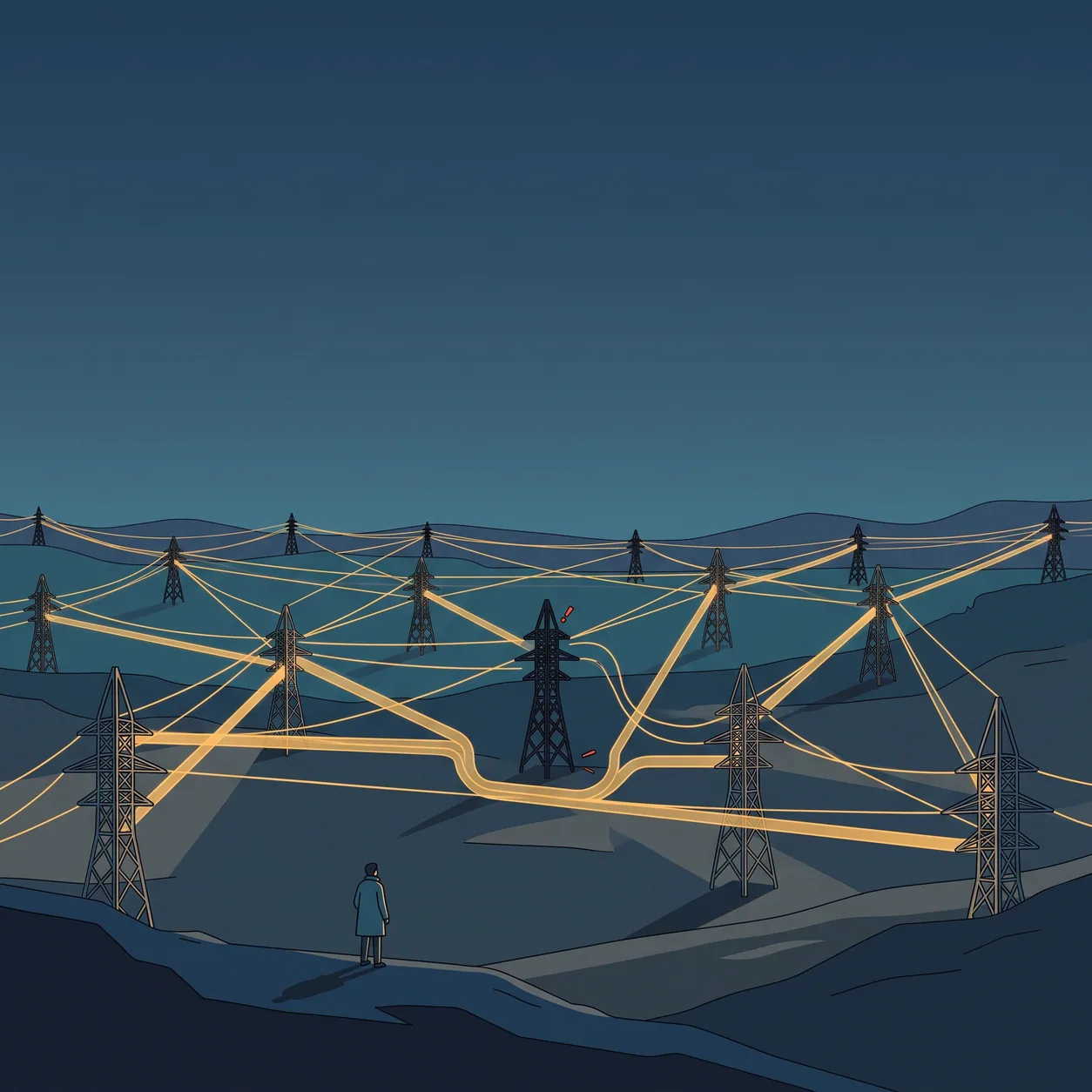
Complex operations may often rely on the quiet assumption that foundational economic nodes will remain permanently operational. When a single major commerce hub pauses unexpectedly, distant networks may quickly feel the friction.
Wikipedia's current-events log for March 28, 2022 recorded that Shanghai entered a two-stage lockdown closing all non-essential businesses after the city reported 3,500 new COVID-19 cases. BBC News reported that China announced its biggest city-wide lockdown since the Covid outbreak began. BBC News added that the city of Shanghai will be locked down in two stages over nine days while authorities carry out Covid-19 testing. BBC News also reported that authorities said public transport will be suspended and firms and factories must halt operations or work remotely.
How Sudden Infrastructure Halts Can Expose Concentrated Risk
A scheduled pause across manufacturing and transit centers may illustrate how tightly coupled modern organizational supply lines might be. When physical offices, transit lines, and factories pause simultaneously, digital alternatives may only partially bridge the disruption. Distributed teams can perhaps maintain software output, but physical goods and local logistics might remain constrained by geographical boundaries.
Leaders who design resilient workflows might need to treat physical geography as an unpredictable variable rather than a constant background condition. A sudden shift to mandatory remote work or halted facility operations may create bottleneck risks that remote tools might not fully resolve.
Why Operational Flexibility Might Require Regional Redundancy
Relying heavily on a single region for fabrication, transport, or administrative operations may introduce systemic vulnerability. Organizations might build greater long-term durability by diversifying key operational sites across multiple independent regions. Designing systems with geographic redundancy may carry initial costs, but it can potentially mitigate catastrophic delays during local emergencies.
Future-focused managers can perhaps view unexpected shutdowns as reminders to evaluate every single point of failure in their logistics chains. Preparing for localized halts might ensure that enterprise operations can continue even when key nodes go offline.
True organizational resilience may ultimately depend on designing systems that can withstand the temporary loss of any single node.
Sources
- Portal:Current events/2022 March 28 (revision 1080371827) - Wikipedia, 2022-03-31
- Shanghai Covid: China announces largest city-wide lockdown - BBC News - BBC News, 2022-03-27