Shared moments of wonder can periodically alter human focus by pulling attention away from immediate daily routines. In an environment that can feel dominated by isolated concerns, widespread natural events might offer a unique point of unified reflection. Such occurrences can encourage individuals to pause and reconsider their connection to larger collective dynamics.
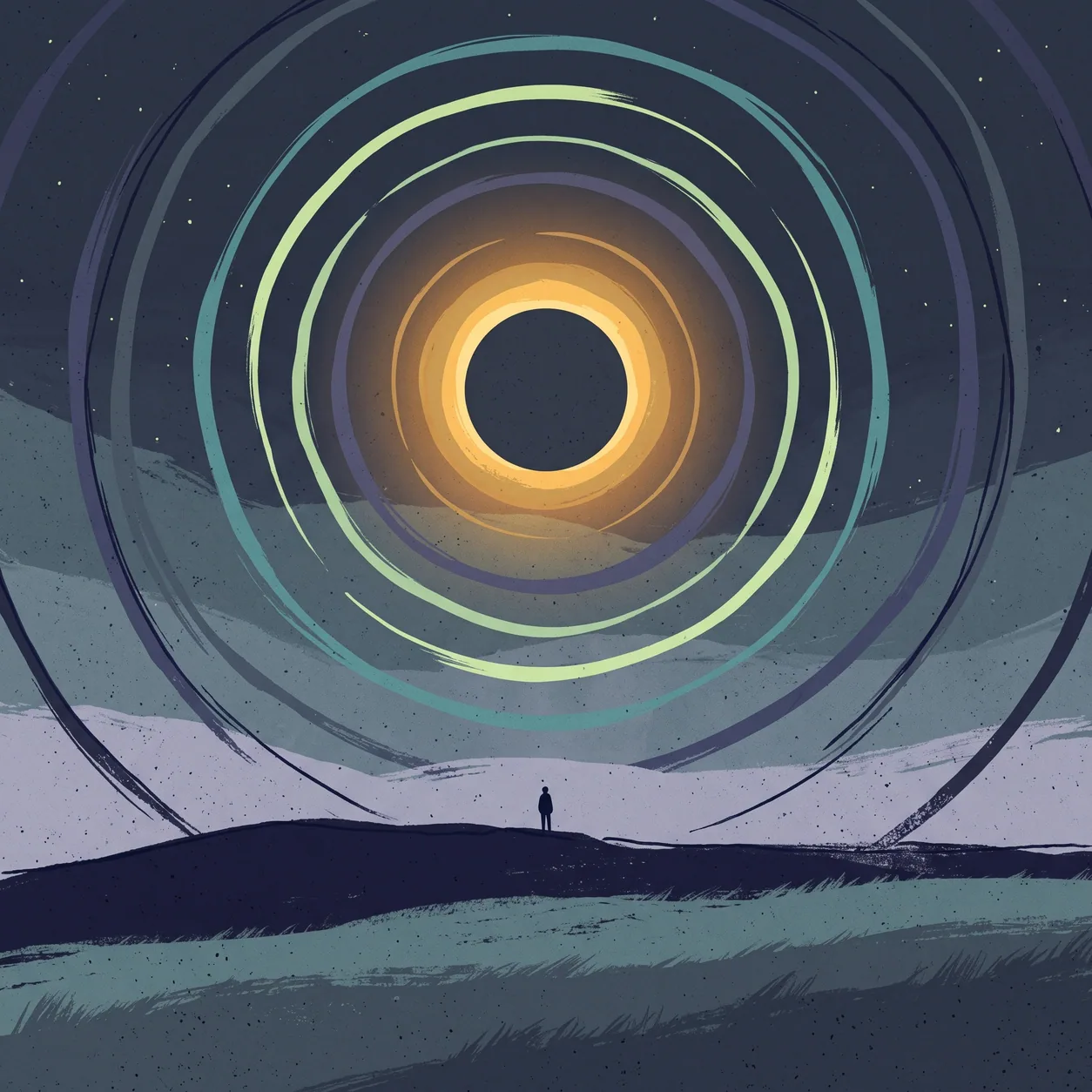
Wikipedia's current-events log for August 21, 2017 recorded that millions of United States residents and visitors are able to witness a total solar eclipse that crosses through North America. Wikipedia's current-events log for August 21, 2017 reported that the eclipse crossing North America was the first total solar eclipse visible across the entire contiguous United States since the solar eclipse of June 8, 1918.
How Might Rare Cycles Shift Collective Focus?
When significant phenomena span across vast geographic regions, they could serve as rare operational and cultural milestones for entire communities. Such instances can create temporary alignment among diverse groups, perhaps demonstrating how shared experiences might briefly transcend standard social boundaries. Even briefly, widespread attention can shift from individual tasks toward a unified observation.
Furthermore, substantial intervals between recurring natural phenomena can prompt broader thinking regarding human growth and technical evolution. Considering present observations alongside historic benchmarks from decades earlier might highlight how communication channels, transportation systems, and information networks have developed. These rare moments can provide a useful lens through which long-term progress might be quietly evaluated.
What Can Long-Term Cycles Teach System Designers?
For organizations and technological builders, long-term predictability can illustrate the fundamental value of stable, structured thinking. While immediate market dynamics or operational challenges may fluctuate continuously, underlying systematic principles might remain steady over extended periods. Focusing on durable mechanics rather than temporary volatility could allow leaders to construct systems that endure across generational shifts.
Recognizing the power of predictable cosmic mechanics might suggest that designing for extended time horizons could yield far greater stability than continually reacting to short-term noise. Building resilient architectures can often involve anticipating long-range cycles and preparing for rare conditions. Organizations that incorporate long-term planning can potentially navigate complex external shifts with greater composure.
Ultimately, experiencing an event that unites millions in shared observation can serve as a reminder of broader systems at work. Perhaps the most valuable insight from such rare occurrences is that collective pauses can offer essential perspective on persistent growth and long-term continuity.
Sources
- Portal:Current events/2017 August 21 (revision 797263623) - Wikipedia, 2017-08-25