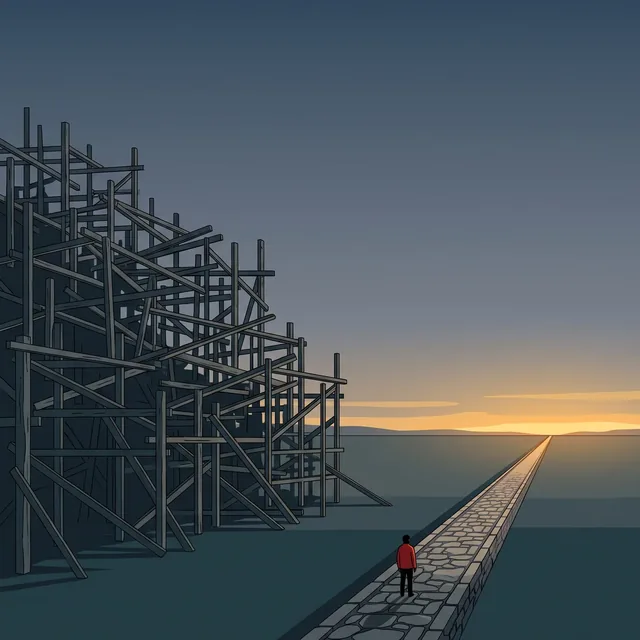
Large-scale engineering endeavors can often push the boundaries of institutional planning and long-term execution. Wikipedia's current-events log for August 6, 2025 recorded that the Italian government authorizes a construction project for a bridge over the Strait of Messina to connect Sicily with mainland Italy. Wikipedia's current-events log for August 6, 2025 recorded that the project will be the longest suspension bridge in the world by the time of its completion in 2032 or 2033.
How Multi-Year Horizons Might Influence System Design
When complex initiatives extend across multiple years or decades, organizational leadership might face changing economic environments, shifting priorities, and evolving technical standards. In general, sustaining a multi-decade effort could demand high consistency in governance and funding. A lengthy timeline can sometimes introduce friction between original theoretical goals and practical operational realities. Consequently, system architects might find that keeping stakeholders aligned over extended spans could require continuous re-evaluation of core assumptions.
Furthermore, grand physical commitments may serve as a reminder that initial authorization can represent merely the starting point of long-term delivery. Formal approval can provide structural authorization, but ultimate completion might depend heavily on sustained technical discipline, risk management, and adaptive scheduling. Analysts might observe that physical engineering and software systems can share similar vulnerabilities when delivery schedules stretch far into the future. Unanticipated delays, resource shifts, or institutional changes could easily disrupt even a carefully structured plan.
What Long-Term Planning Can Teach Strategic Builders
For builders and strategic planners, extended delivery cycles might underscore the value of modular design and flexible management structures. Designing systems that can withstand political, economic, or technological shifts might require building buffer capacity directly into early plan architecture. Perhaps a major difficulty in mega-scale planning might lie in maintaining focus through changing environments while preserving foundational objectives. When a multi-year effort attempts to span geographical or structural divides, sustained organizational alignment could prove as critical as technical feasibility.
True long-term endurance may depend less on the initial scale of authorization than on the capacity to maintain alignment across shifting operational landscapes.
Sources
- Portal:Current events/2025 August 6 (revision 1305043646) - Wikipedia, 2025-08-09