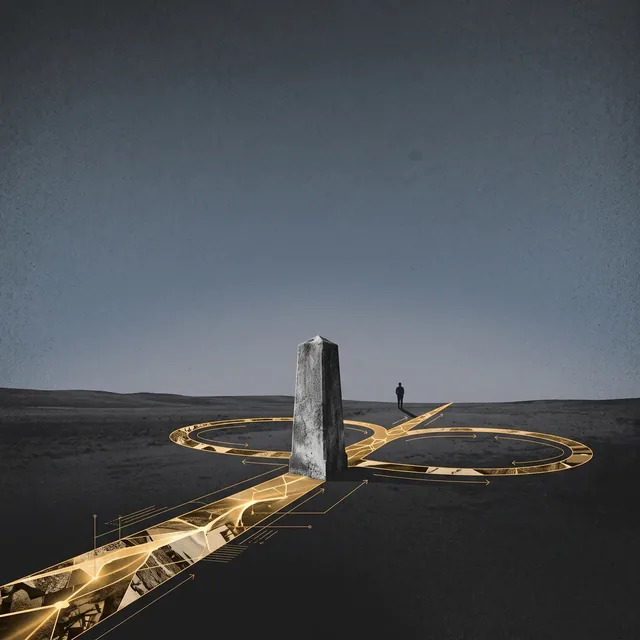
Complex engineering projects might demand years of quiet work long before any major outcome can be observed. Success in ambitious endeavors may often depend on foundational decisions made far in advance, where autonomous systems can function reliably across vast distances over extended periods.
Wikipedia's current-events log recorded that NASA's Juno spacecraft reached Jupiter and entered into its orbit after a five-year flight. The NASA Jet Propulsion Laboratory reported that the Juno spacecraft launched on Aug. 5, 2011, from Cape Canaveral, Florida. The laboratory also reported that Juno was on course to swing into orbit around Jupiter on July 4.
How long-term projects might handle multi-year execution
Sustained commitments could require organizations to build tools capable of operating across long timelines without continuous human intervention. Teams that plan for multi-year efforts might need to focus on fundamental system durability rather than seeking immediate public confirmation. When operations travel through silent intervals, steady execution behind the scenes may matter far more than frequent updates or external attention. In general, maintaining organizational focus over lengthy operational cycles can require deep institutional patience and rigorous forward planning.
The NASA Jet Propulsion Laboratory stated that data from Juno's Waves investigation indicate the spacecraft's crossing of the bow shock just outside Jupiter's magnetosphere on June 24.
Why steady instrumentation can offer value to complex missions
Capturing subtle environmental signals along an operational path might provide essential diagnostic clarity before reaching a primary objective. Project leaders who design complex machinery for distant goals could benefit from monitoring quiet telemetry along the transit route. Such preliminary data streams can help engineering teams validate baseline parameters while confirming that underlying instruments remain operational. Early confirmation of system integrity during mid-flight transitions may offer valuable assurance to operators managing high-stakes missions.
Ultimately, remarkable long-term achievements may depend less on sudden late course corrections and more on the quiet discipline to let well-designed systems complete their intended journeys.
Sources
- Portal:Current events/2016 July 5 (revision 729026897) - Wikipedia, 2016-07-09
- News | NASA's Juno Spacecraft Enters Jupiter's Magnetic Field - NASA Jet Propulsion Laboratory, 2016-07-05