Capturing information and extracting value from it are two entirely different engineering problems. Sometimes, a system succeeds at the first long before anyone builds the tools to achieve the second.
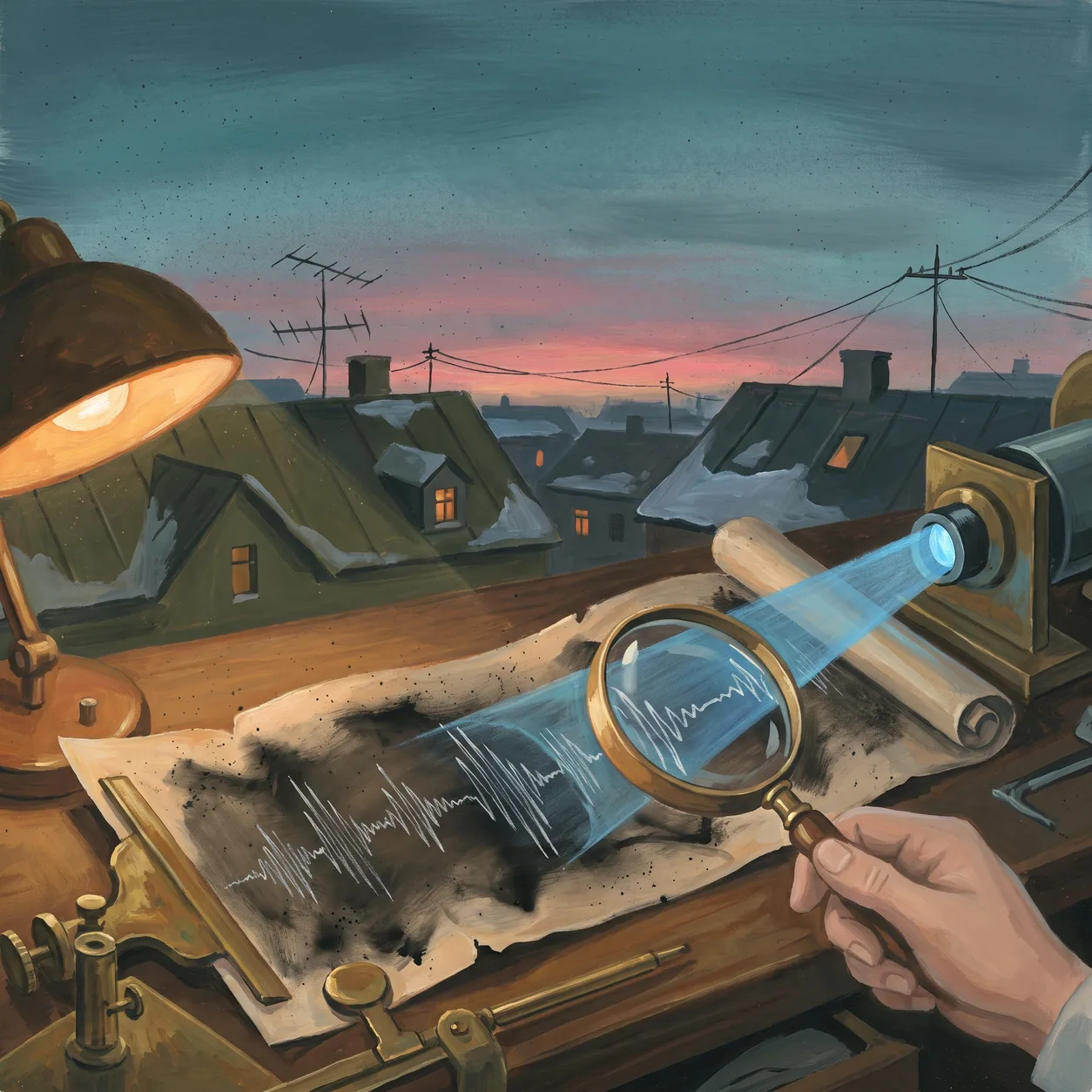
In March 2008, American researchers replayed a recording of "Au Clair de la Lune" that was captured on April 9, 1860. The short song was recorded using a phonautograph, a device created by Parisian inventor Edouard-Leon Scott de Martinville. This 1860 capture is thought to be the oldest known recorded human voice. The audio was scheduled to be presented on March 28 at a conference of the Association for Recorded Sound Collections at Stanford University in California.
The Gap Between Capture and Playback
BBC News reported that the device etched representations of sound waves into paper covered in soot from a burning oil lamp. The reports place the recording and its replay far apart in time, and that distance is the subject of what follows.
A separation of capture and extraction can appear in many technical systems. Systems may be deployed to log interactions, map environments, or track metrics long before the analytical models required to make sense of that data are mature. The initial value of the system is simply its capacity to preserve the signal faithfully.
When evaluating a new platform, the immediate output is only part of the equation. The underlying architecture might be doing the quiet work of archiving inputs that will only become legible when a subsequent layer of innovation arrives. Building for the future sometimes means designing the sensor today and trusting that tomorrow will invent the speaker.
Sources
- Portal:Current events/2008 March 27 (revision 202044928) - Wikipedia, 2008-03-30
- Oldest recorded voice discovered - BBC News, 2008-03-28