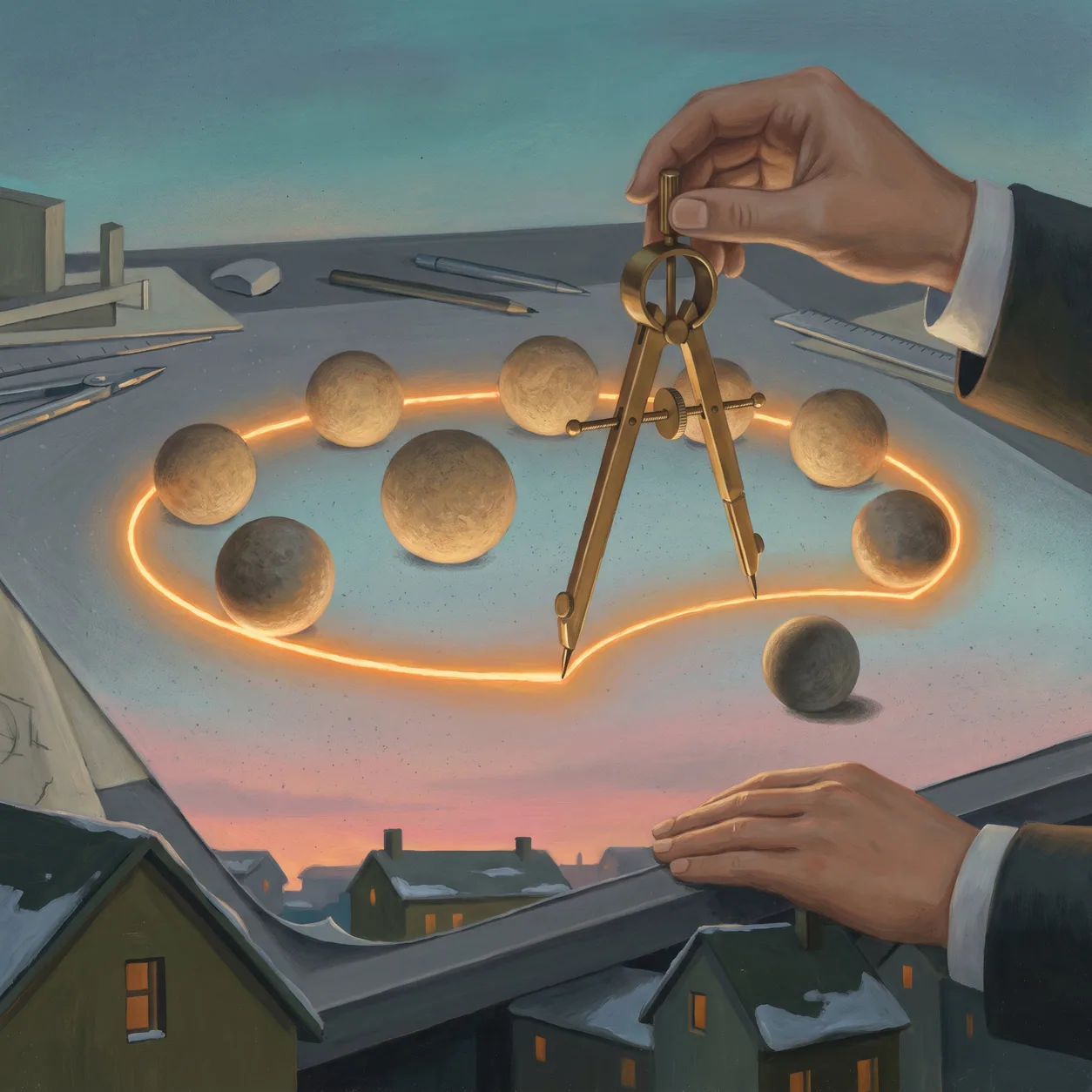
Categories are human constructs, not natural laws. When a system's rules change, the objects within it do not physically alter, but their status can vanish instantly. The act of classification is fundamentally an act of exclusion.
On Thursday, leading astronomers declared that Pluto is no longer a planet under historic new guidelines that downsize the solar system from nine planets to eight. A clear majority of researchers voted for the new definition at a meeting of the International Astronomical Union in Prague, in the Czech Republic.
How Strict Criteria Reshape Systems
The decision took place at a conference of 2,500 astronomers from 75 countries, marking a dramatic shift from just a week ago. By adopting these rules, the International Astronomical Union stripped Pluto of the planetary status it has held since its discovery in 1930.
The rationale rests on structural hierarchy rather than mere existence. Pluto is no longer a planet, according to a new official definition. Pluto has been demoted because it does not dominate its neighborhood.
The celestial body remains exactly as it was, but the human framework for organizing space has tightened. When rule-makers clarify a system's boundaries, they must be willing to exclude outliers that no longer fit the model. A rigorous definition creates a more coherent system, even if it requires abandoning a familiar arrangement.
Sources
- Pluto gets the boot - CNN, 2006-08-24
- Pluto Not a Planet, Astronomers Rule - National Geographic, 2006-08-24