True anomalies do not just stretch existing boundaries; they suggest entirely different categories of existence. When an observation breaks the scale of what is considered normal, it forces observers to rethink the underlying mechanics of the system.
NASA reported that it was the brightest stellar explosion ever recorded. The supernova was located in the galaxy NGC 1260, some 240 million light years away.
The Architecture of Observation
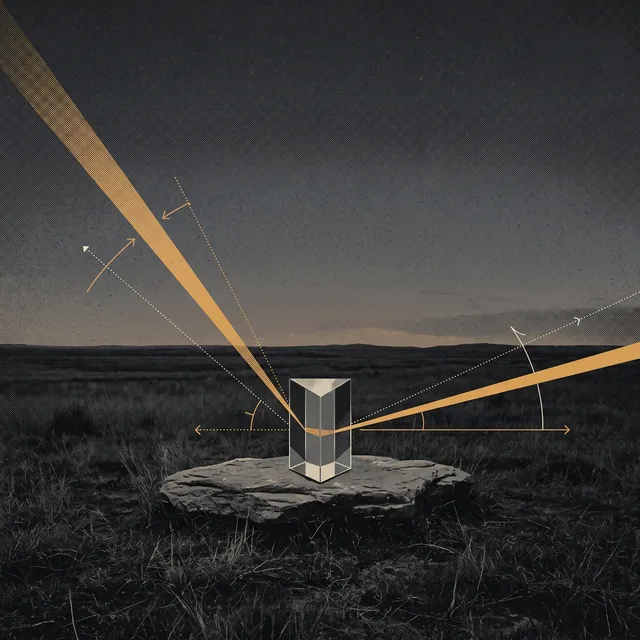
Identifying a categorical shift requires layered perspectives. A single instrument might register an inexplicable spike, but combining distinct modes of measurement creates a composite picture robust enough to validate an extreme outlier.
Nathan Smith of the University of California at Berkeley led a team of astronomers from California and the University of Texas in Austin. Smith stated, "This was a truly monstrous explosion, a hundred times more energetic than a typical supernova". The brightest stellar explosion ever recorded may be a long-sought new type of supernova, according to observations by NASA's Chandra X-ray Observatory.
Categorical Expansion
Scale alters the fundamental nature of an event. An occurrence that operates at a vastly different magnitude than its peers is rarely just a larger version of a familiar mechanism. It points to theoretical frameworks that have been predicted but lacked physical proof. Progress relies on building the capacity to capture these rare, massive signals when they finally arrive.
The most valuable data points are often the ones that break the chart.
Sources
- NASA's Chandra Sees Brightest Supernova Ever - NASA, 2007-05-07
- Chandra :: Press Room :: NASA's Chandra Sees Brightest Supernova Ever :: May 7, 2007 - Chandra X-ray Center / Harvard-Smithsonian Center for Astrophysics, 2007-05-07