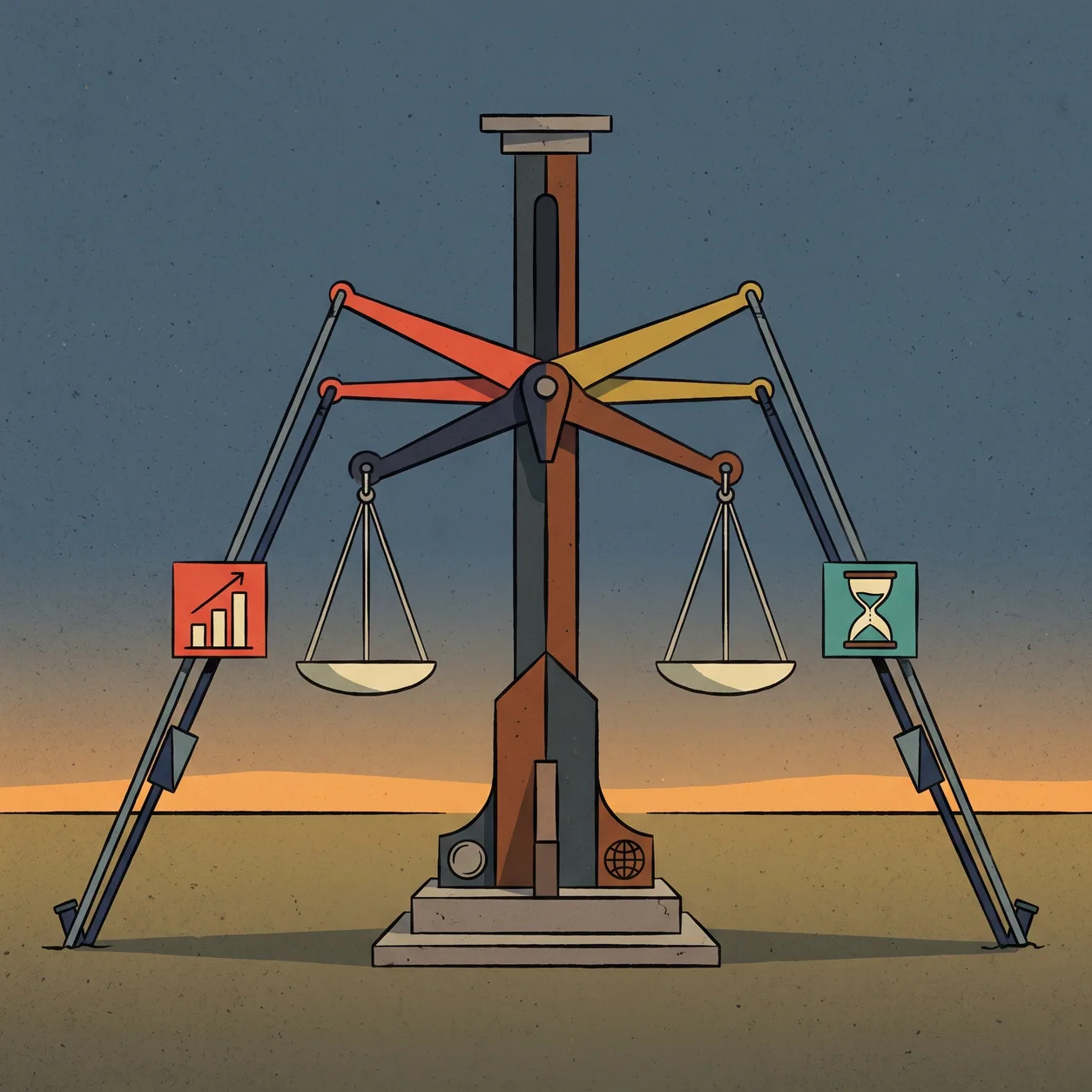
Shared executive power is often designed to balance authority, but it can easily fracture into competing mandates. When one leader attempts to enforce accountability, another with overlapping authority may view the action as a structural overreach rather than a functional necessity.
Wikipedia’s current-events log for February 14, 2010 recorded that Kenyan President Mwai Kibaki undoes the suspensions for fraud of the agriculture and education ministers handed out by his Prime Minister.
The Mechanics of Competing Mandates
One reading is that this points to a tension in systems where two leaders share executive power. In general, unclear divisions of authority may allow leaders to countermand each other, turning administrative decisions into public power struggles. If a prime minister issues a suspension and a president immediately reverses it, the underlying issue may be sidelined by the procedural conflict.
In general, organizational structures that require consensus for discipline often struggle to enforce it. When two executives operate with separate bases of authority, a disciplinary action might be interpreted as a political maneuver. Reversing that action then becomes a necessary counter-move to maintain equilibrium, regardless of the original offense. The focus might then shift from the original allegations to the boundaries of executive power.
Accountability as a Structural Stress Test
For people who build organizations, there may be a lesson in systems design. Accountability mechanisms might fail if the authority to enforce them is not clearly delineated. If multiple stakeholders hold veto power over personnel decisions, the system may default to inaction, protecting individuals simply because the leadership cannot agree on who holds the right to punish them.
Perhaps the most significant risk in these arrangements is the erosion of institutional credibility. When disciplinary steps are reversed from above, it might signal to the broader organization that political alignment supersedes operational integrity.
Perhaps accountability depends not only on the will to enforce it but on clear answers about who may do so.
Sources
- Portal:Current events/2010 February 14 (revision 345230435) - Wikipedia, 2010-02-14