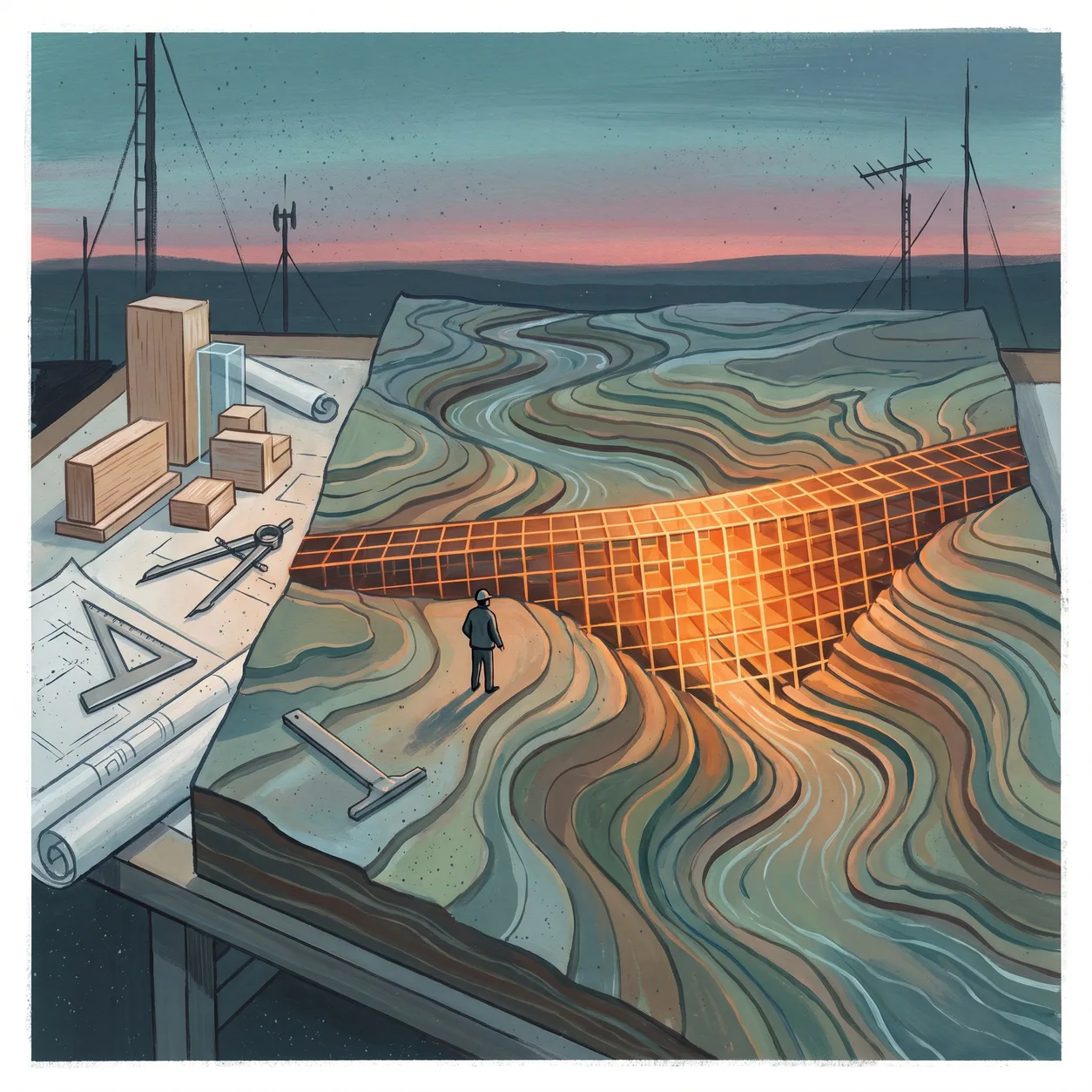
True scale in engineering is not measured by the volume of materials used, but by the ambition to manage entire natural systems. When infrastructure reaches a certain magnitude, it stops being a structure placed within an environment and becomes the environment itself.
On May 20, 2006, construction of the Three Gorges Dam wall was completed in the People's Republic of China. The structure stands as the largest dam in the world. The Yangtze Three Gorges Project is one of the biggest hydropower-complex projects in the world.
Managing Geography
The dam is located in the areas of Xilingxia gorge, one of the three gorges of the river. The dam site will control a drainage area of 1 million km 2, with an average annual runoff of 451 billion m 3.
Building at this scale requires treating a massive river basin not as a fixed geographical feature, but as a dynamic variable that can be regulated. In this article's reading, a finished wall is a milestone rather than an ending: a dam at this scale is as much about managing water flow and energy as about pouring concrete. The engineering challenge shifts from pouring concrete to operating a system that dictates the behavior of a major continental artery.
Projects of this magnitude force a reevaluation of what it means to build. The focus moves from constructing an isolated object to designing a control mechanism for a complex, living system. Megaprojects demand that builders think beyond the immediate footprint of their work. The ultimate product is not the concrete wall itself, but the newly engineered equilibrium of the watershed it commands.
Sources
- Portal:Current events/May 2006 (revision 56227326) - Wikipedia, 2006-05-31
- China Three Gorges Project Corporation - China Three Gorges Project Corporation, 2006-05-10