Industrial safety and organizational integrity may be tested less during routine operations than during sudden operational failures. When physical systems break, the immediate response from managers and institutions can shape both ecological safety and public faith.
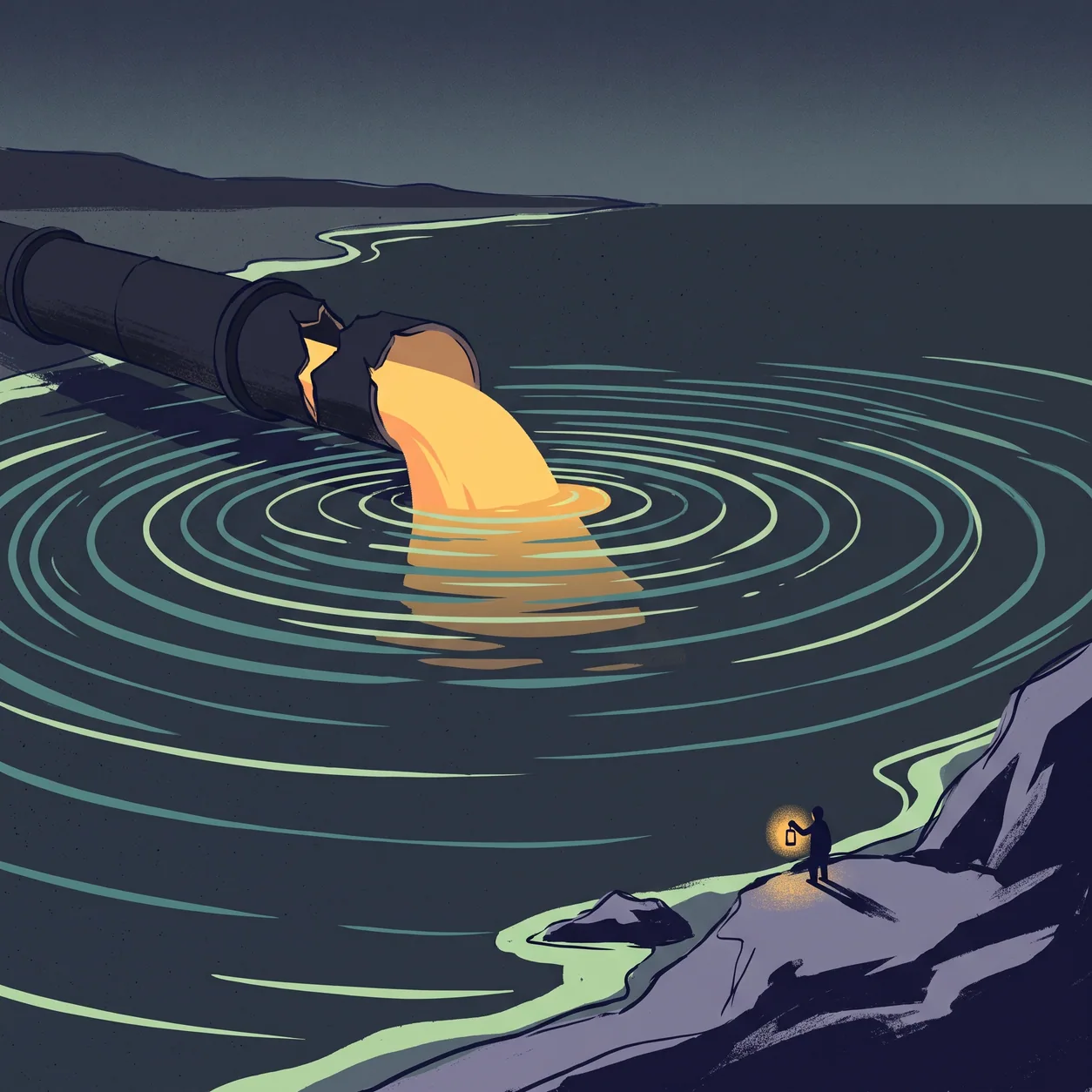
The physical consequences of such technical breakdowns might spread beyond industrial terminals into surrounding ecosystems and commercial communities. Wikipedia's current-events log for November 4, 2018 recorded that 69.1 tonnes of C9 aromatic hydrocarbon were leaked into the ocean at a port in Quangang District, Quanzhou, China. The log also recorded that nearby aquaculture farms were contaminated, resulting in huge loss.
How Operational Mistakes Can Ripple Beyond Immediate Industrial Boundaries
Complex technical infrastructure can create systemic dependencies where a single point of failure can lead to severe downstream harm. In high-risk operational environments, early public acknowledgment of risk could arguably help local populations take protective measures before damage escalates. Wikipedia's current-events log for November 4, 2018 recorded that local authorities were accused of playing down the severity of the leakage.
When institutions obscure or minimize critical operational incidents, public distrust can expand rapidly, potentially causing greater friction than the original technical failure itself. In general, attempts to manage reputation at the expense of early transparency might delay effective remediation and exacerbate human suffering. Information delays in feedback loops might prevent timely corrective action, perhaps transforming localized accidents into broader institutional crises.
Why Information Flow Might Determine Risk Mitigation Success
For managers and system operators across industries, institutional resilience might depend as much on truthfulness as on preventative maintenance. A culture that encourages accurate, unvarnished reporting during emergency situations can potentially protect surrounding communities and preserve long-term organizational viability. Ultimately, responsible leadership might require accepting the short-term difficulty of full disclosure to prevent far deeper operational and social damage.
Sources
- Portal:Current events/2018 November 4 (revision 870670399) - Wikipedia, 2018-11-26-11-26